
Frame - Roadeo
Frame - Roadeo
Couldn't load pickup availability
Roadeo
MUSA (Made in USA) Roadeos are made to order. Please call (800) 345-3918 to discuss sizing and place a deposit. Current lead time is about 2 years.
The Roadeo is now made for us by our custom builder Mark Nobilette out of Longmont, CO. It is our design, uses our lugs, and our choice of tubing. We specify every detail on it.
Use, Purpose
It's the bike to get for speedy riding without racks and bags, except for maybe a seat or bar bag. It's not a "light touring" bike, or anything of the sort. It's a bike for swift solo rides and fast club rides, where riding is the thing, as opposed to doing something on your bike.
Safety
It's the bike to get for speedy riding without racks and bags, except for maybe a seat bag.
Price and Value
Frame and fork, $2,800. Complete builds run $4,000 to $5,400, depending on the parts. Let us help you pick the parts that get you the result you want with whatever budget you have. We do it all the time. You don’t have to know the ins and outs, because we do.
Ride
Modern, featherweight, super-short wheelbase carbon road bikes are too twitchy. When you watch even pros ride them, you can see them tilt too much with every pedal stroke, and yes, they can be tamed, but they respond too much to body English, wind, and rough surfaces. On fast descents, they’re simply unsafe.
The Roadeo is as responsive as a road bike should be, but no more. The wheelbase is a little longer than most—an inch to an inch and a half. It’s noticeable if you think it is, but it’s not blatant. Absolutely, it’s more secure at high speed or in bad conditions or when you’re one-handing the bike while eating something, or no-handing it when you’re zipping up or whatever.
The Roadeo is the best bike we make for fast road rides, club rides, even racing.
Safety
A steel frame and fork is safer on your first ride and maintains its safety much longer than carbon does. Failures are rare, grow to total failure slowly, and are on the surface where you can see them. Failures in carbon bikes often originate between the layers, where they're undetectable until the tube snaps.
And in response to trauma, steel bends and dents. It doesn't snap, as carbon does. Steel is the safest frame material, no question about it.
Weight (finally)
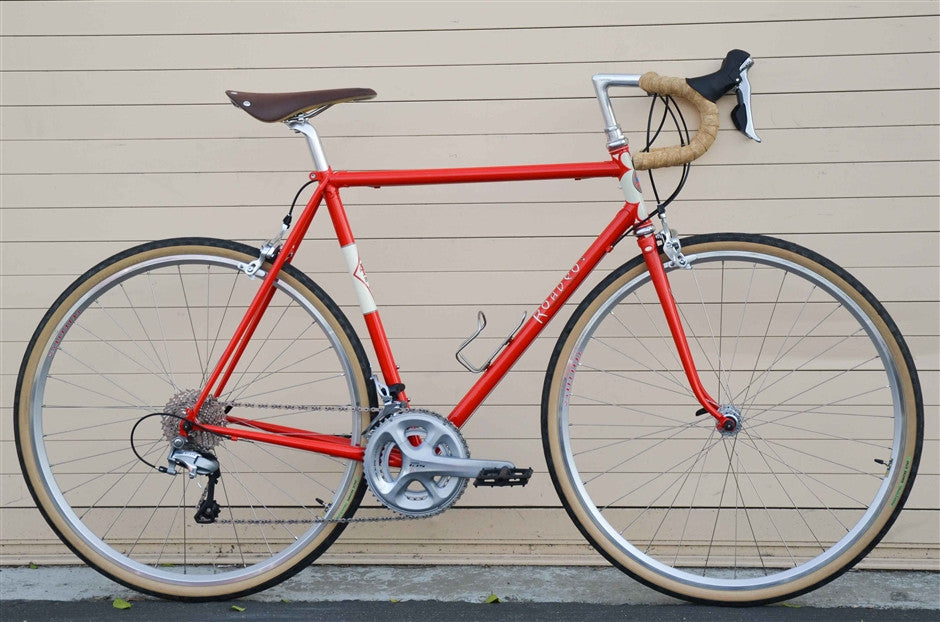
We use the lightest tubing we can stand to put on a bike. The Roadeo frame and fork are light by ‘70s standards, not ’00 standards. A 55cm Roadeo frame weighs just under four pounds. Built up with Mark's choice of lightish clubby parts, his 55cm weighs (minus saddle and pedals) 18 pounds.
Tire capacity and brake requirements
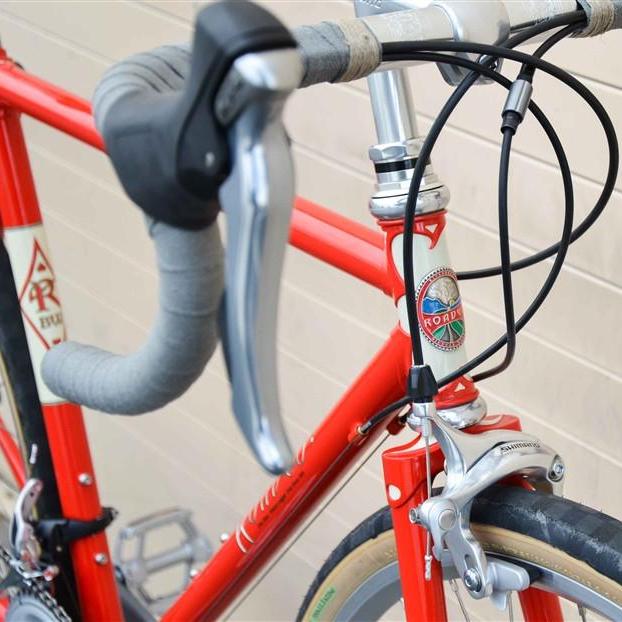
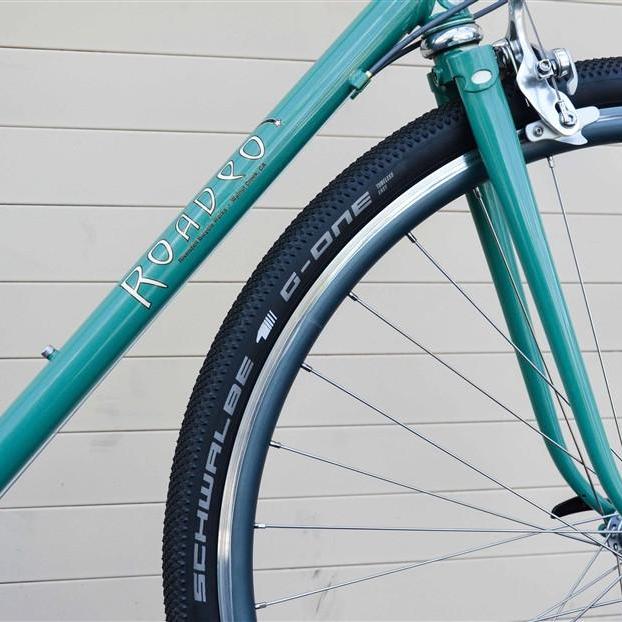
Roadeo fits tires to 36mm, and requires a “medium reach” brake. The actual brake reach is 55mm plus or minus a hair. It doesn’t fit short-reach racing brakes, but Shimano and Paul make brakes that work fine. Consult us or buy the brakes from us, and all shall be good.
We don’t make this or any other bikes for disc brakes.
Stem styles
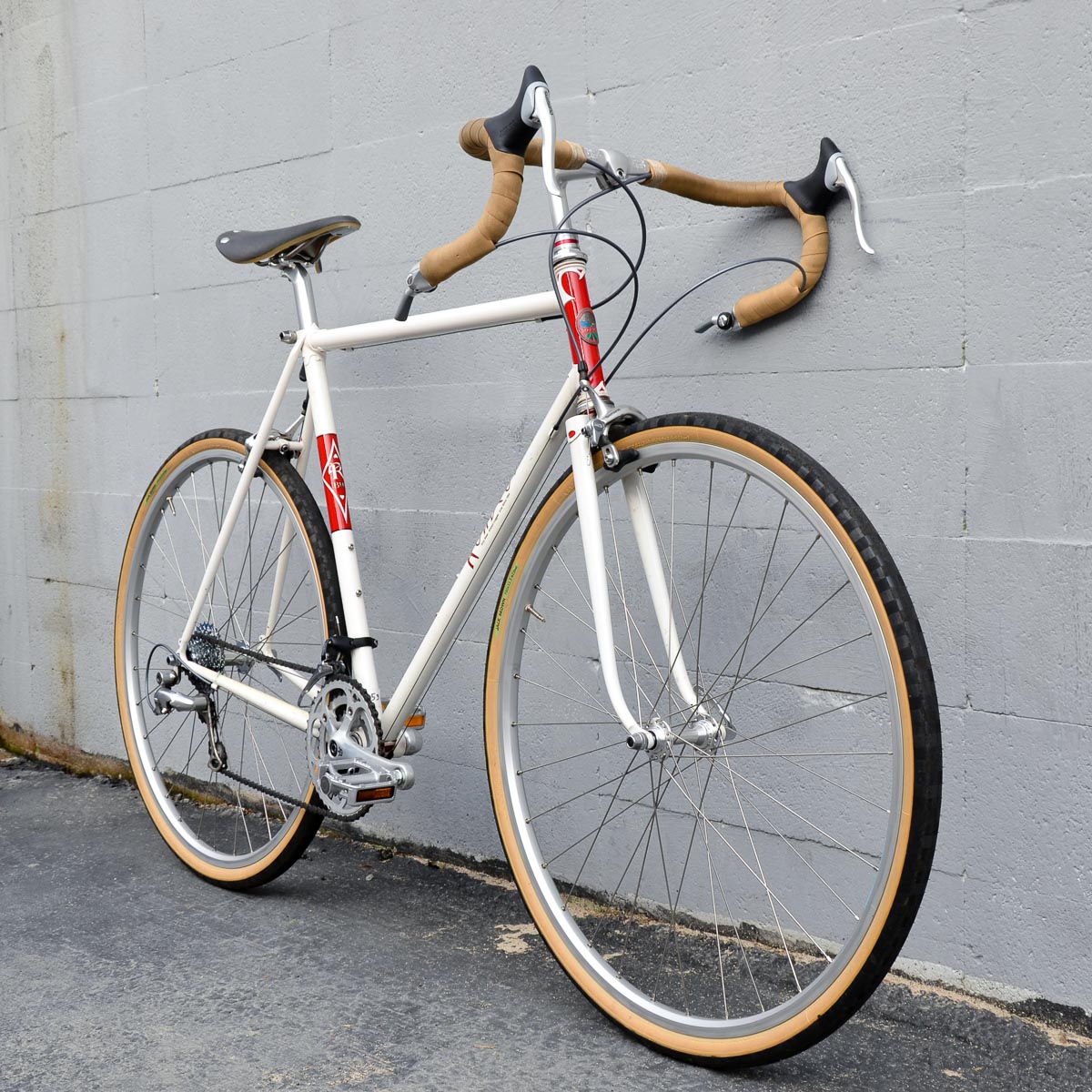
The Roadeo lets you ride bars that are a bit higher than other road bikes. You have two fork options---both 1" diameter steerer tubes. You can go with a traditional threaded steerer if you prefer a quill stem, or a threadless steerer if you want a clamp-on style stem. Our advice is to go threadless if you run the bars below saddle level. If you like the bars level with your saddle or higher, then stick with a quill stem and traditional threaded steerer.
Beauty
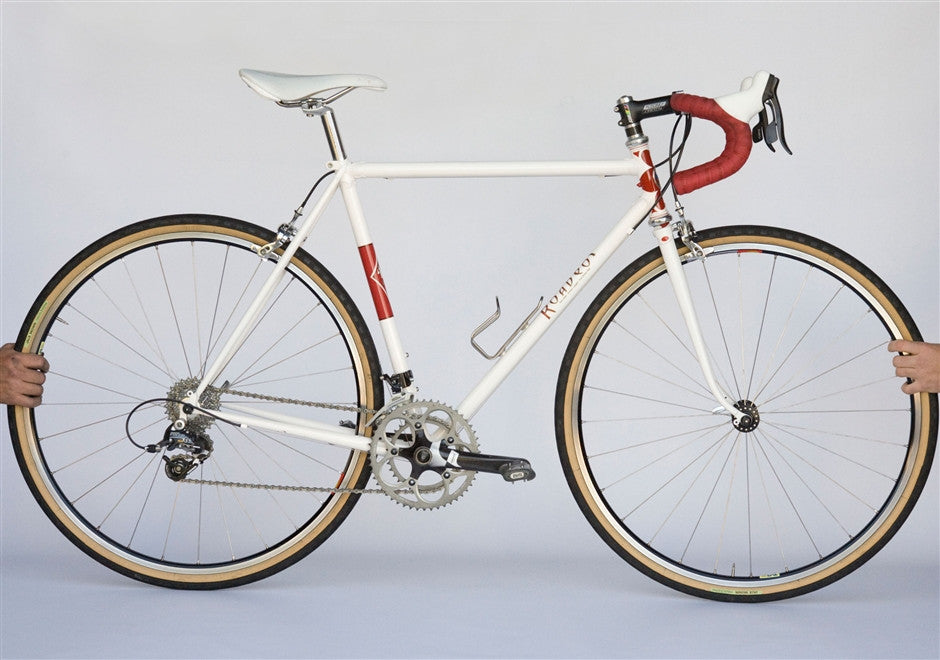
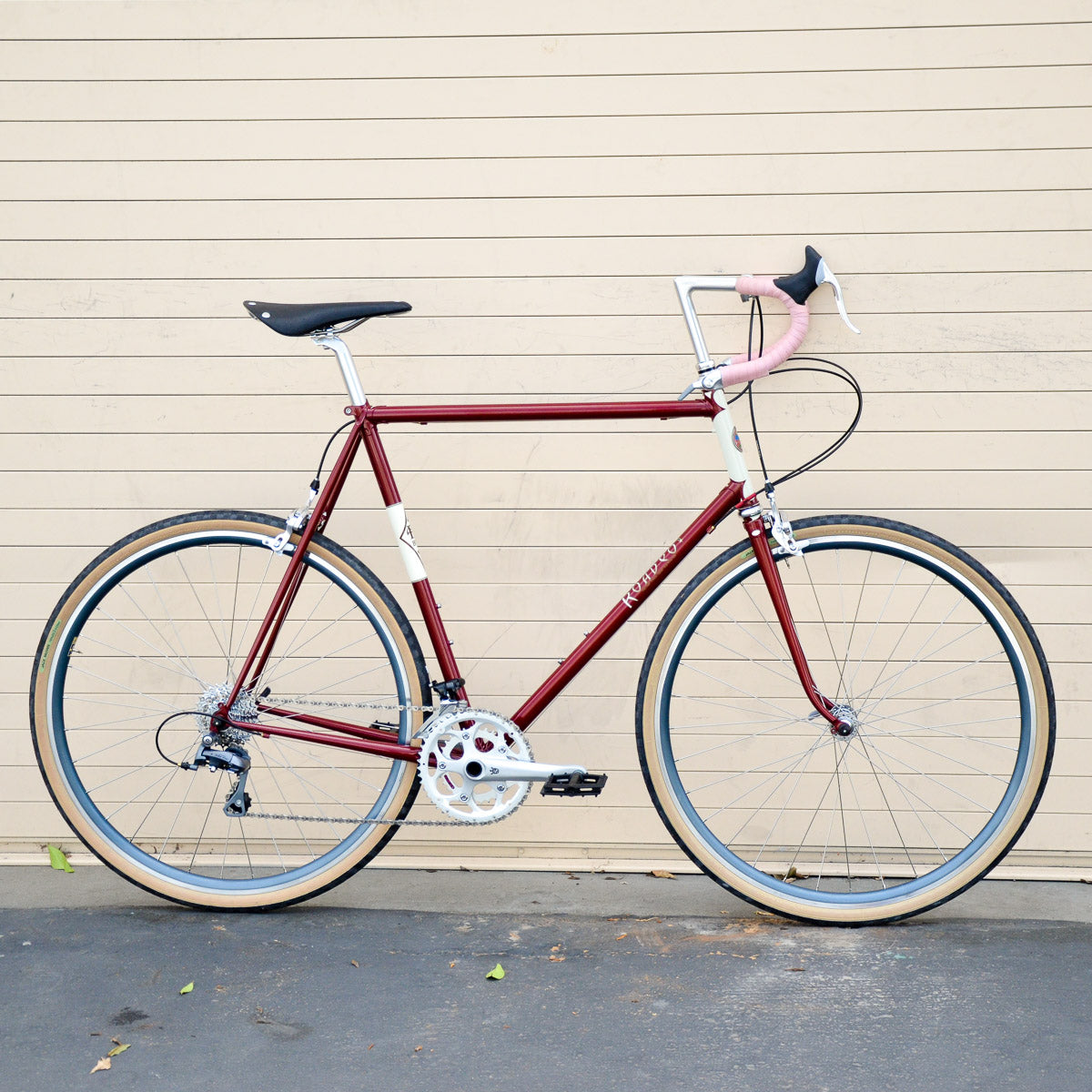
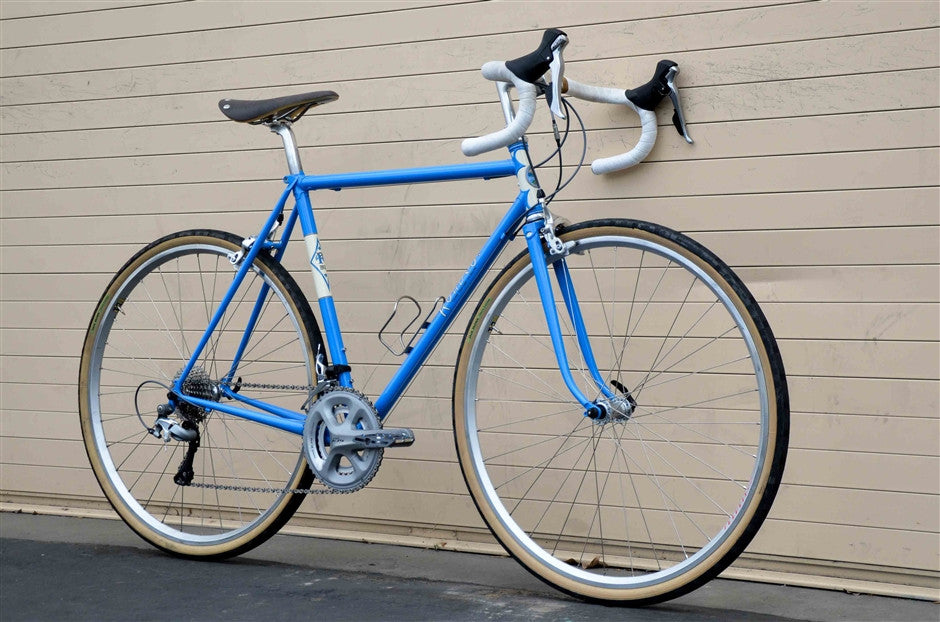
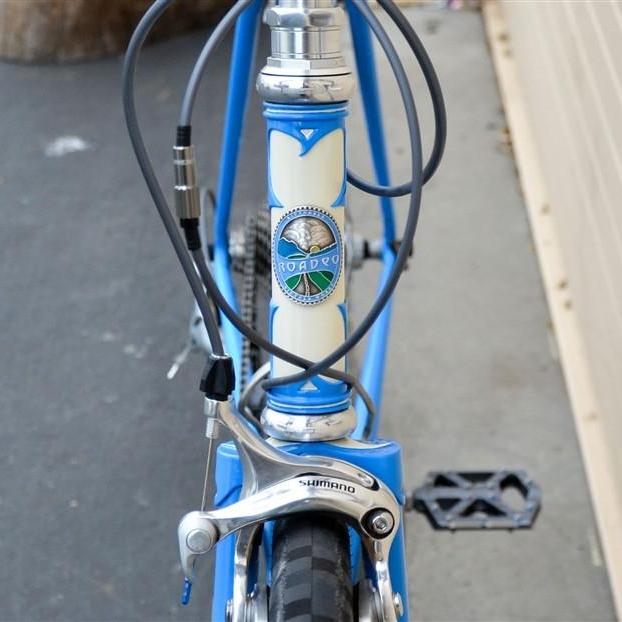
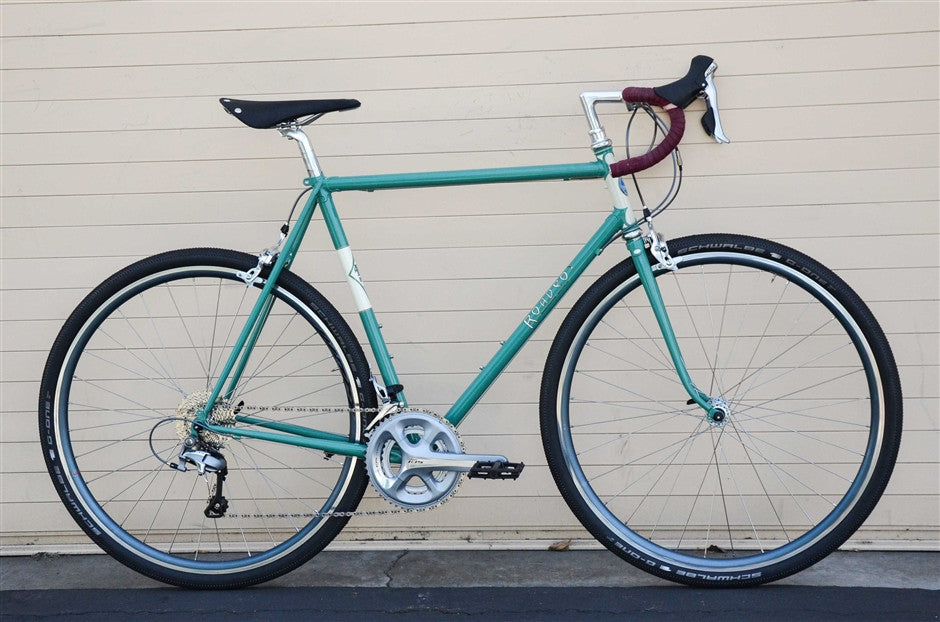
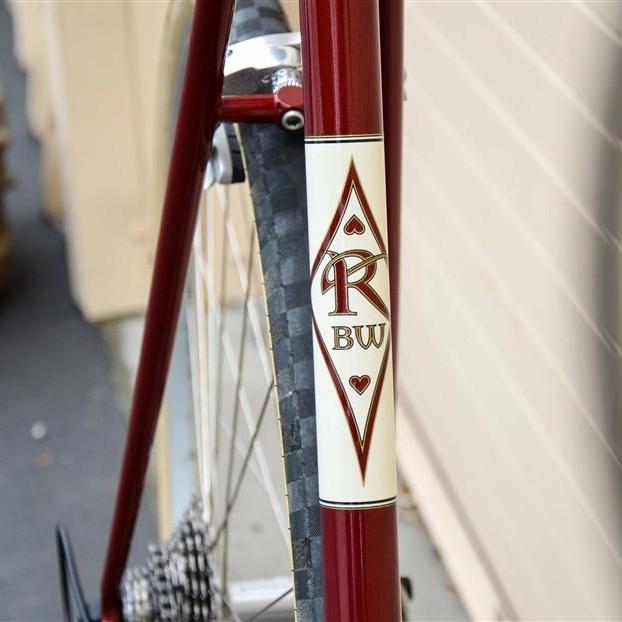
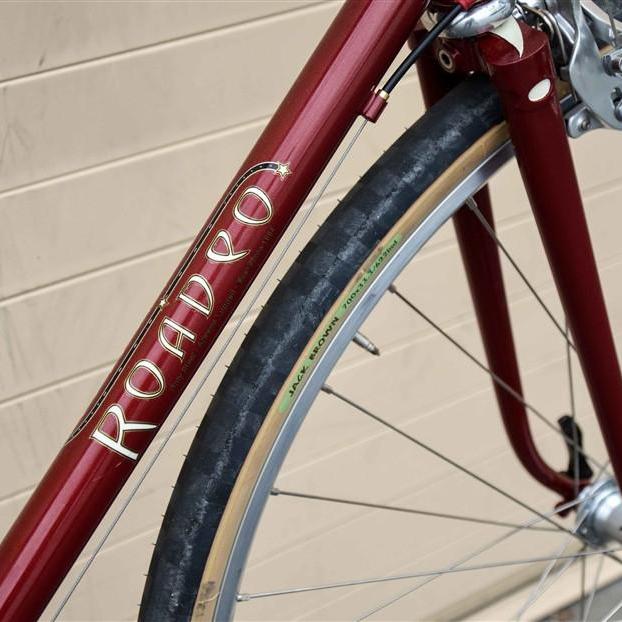
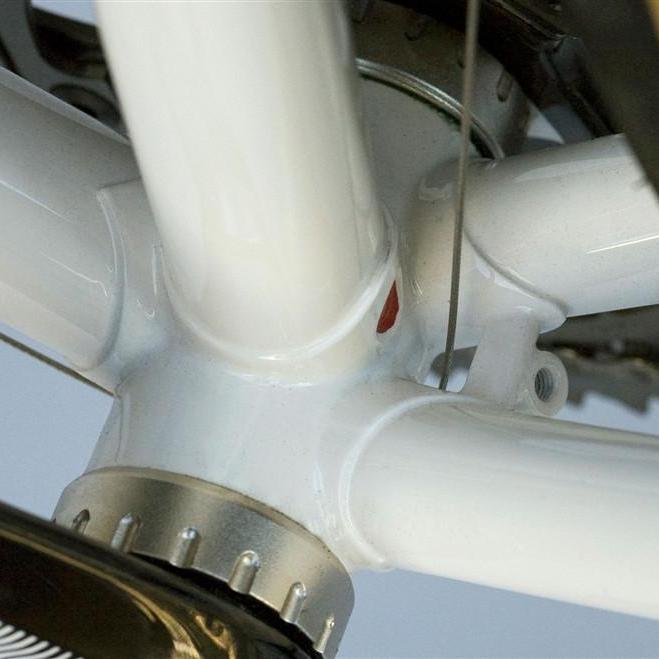
Nobody ever squawks about the looks of fine lugged steel. Even among the finest of lugged steel frames, a Roadeo's a stunner. We use our own lugs, never hard on the eyes. The slender tubes form a slender frame, much skinnier than the frame on a MCRB. The overall effect is birdlike and structural, like a skeleton or metal bridge. Even non-cyclists appreciate the look of a fine, slender-tubed lugged steel bike.
Value
The Roadeo costs less (roughly $5,000 for the fancy version) and four to seven times the reasonable expected service life of a carbon bike.
Colors
You can choose just about any color that goes well with cream accents. Depending on the color you choose there may be a slight upcharge from the base price. We'll confirm this once the order is placed
Which way----threaded or threadless?
Threaded gives you more bar-height potential (which translates to comfort, for most people) but weighs about 8 ounces more. It's probably the way to go if you're a solo rider wanting a light road bike with maximum comfort and classic styling. If you'll likely run your bars at or above saddle level, this is definitely the way to go from a functional and aesthetic perspective.
Threadless is the modern way, a little lighter, more in keeping with the look of modern road bikes. It is theoretically possible to raise the bars exceptionally high with a threadless fork (with a steel steerer tube), but good taste limits the spacers between stem and headset to about 80mm--still much higher than a carbon steerer allows. If you run your bars below saddle level, then this option makes sense.
If you get one fork and later wish you'd gotten the other, you can get another fork. It'll cost you about $400, but that's right in line with a name-brand carbon fork. Our fork is safer, longer-lasting and better-looking (and then you have two good forks).
With either kind of fork, threadless or threaded, you'll be much more comfortable---and safer---on the steel Roadeo than on any carbon bike of the same size.That doesn't mean it'll never break. Any bike can, even a steel one; and the Roadeo is a light steel one. But steel, by its nature, is safer than any other frame material, and the steel in the Roadeo is really good, strong steel. We won't sell you one if you weigh 250 pounds or more. The Roadeo is a light road bike for sub-heavyweights. It's not for everybody.
Fitting specs
Rear hub: 130mm
Seat post: 27.2mm
Front derailleur: Clamp-on, 28.6mm
BB threading: British
Two water bottle mounts, DT Shifter bosses, single eyelets front and rear dropouts
Sizing
Measure your PBH. Here's a link to how.
For a "race fit" with more seat post showing, subtract 27cm from your pbh and go with the closest size. If your PBH is 87, you'd subtract 27 and get 60; you could go with a 59 or 61. If you want higher bars, go bigger. If you want more post showing, go smaller. You'll have crotch-room either way. You can go small and leave the steerer long, to get the bars up.
To place a deposit:
Call in your order and plunk down $1,400 non-refundable. That'll give you a place in line. We expect you'll have a frame or bike in about 2 years, but that's not a promise. Between now and then we'll work with you as needed or as you like, to make sure you pick the right parts.
800 345-3918
If you're interested in ordering a frameset or complete bike, just contact Mark and he can help you out.
mark@rivbike.com
Testimonial from an owner of TWO Roadeos:
Mark--
Thanks for your help with my purchase of the Roadeo a few months back. I rode it for two weeks in Arizona at LH and NS's Desert Camp where I was a speaker.
This is my 21st year at their camps and while I've ridden my sage green Roadeo other years, I've never had the number of admiring comments about a bike as I did this year. There's something about the white with red panels that drew riders to the bike. Almost all of the riders (we had 35 the first week and 57 the second week) were on either carbon or ti but everyone was impressed by the lug work and paint job.
And they were surprised by the light weight of the bike--I think most riders who have come into the sport relatively recently think any steel bike is a heavyweight. I hefted my bike and then several carbon bikes and there was little if any difference in the perceived weight. Many carbon bikes aren't as light as most people think they are!
So I think that a lot of riders got a good look at an alternative to carbon. I certainly enjoyed riding it--great handling and comfort on the rough roads of SE Arizona.
Thanks again!
F.M.
RoadBikeRider.com
Share

